DIS IN THE MOUNTAINS STORMWATER PILOT PROJECT
ASHEVILLE, NC
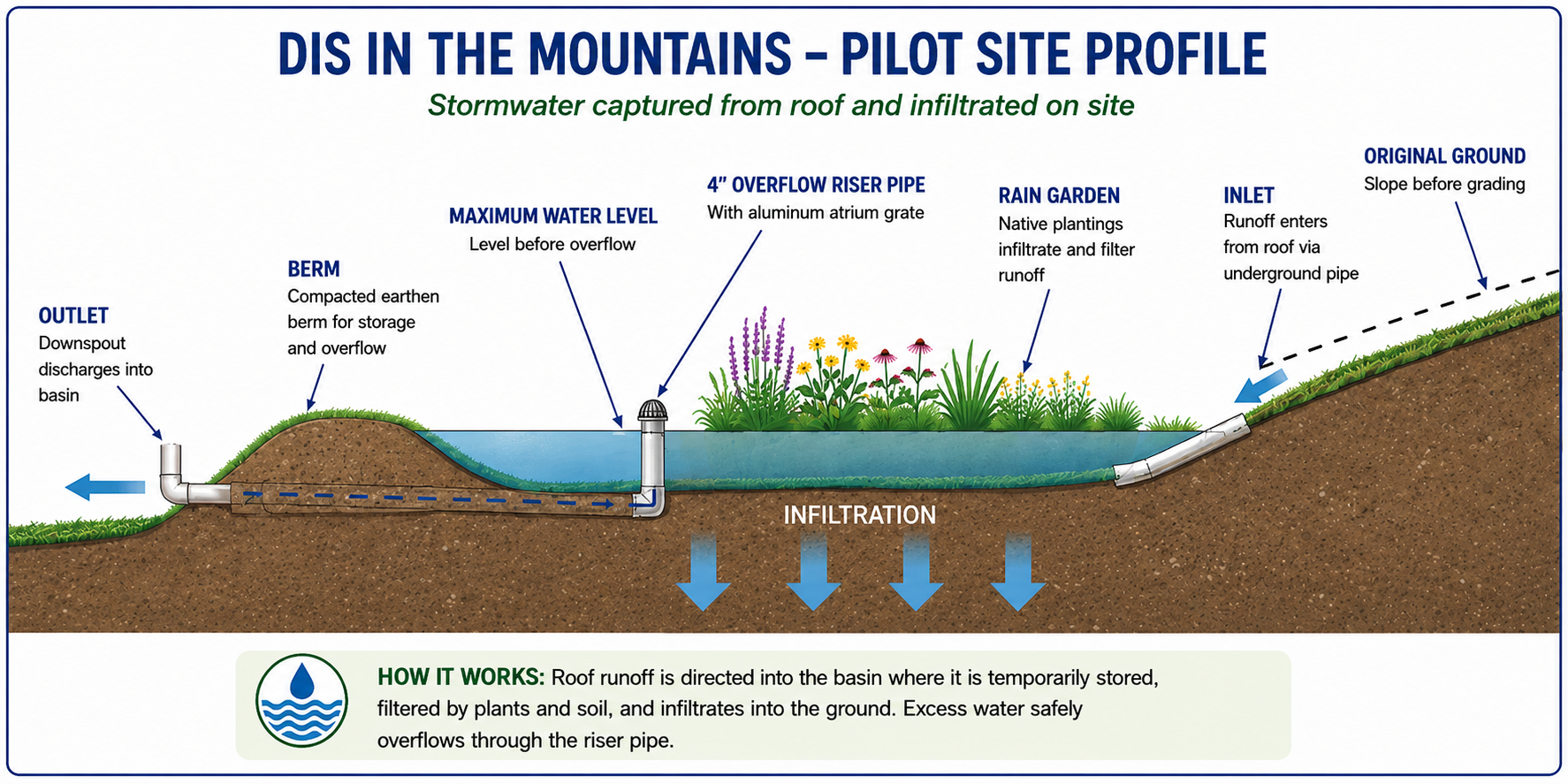
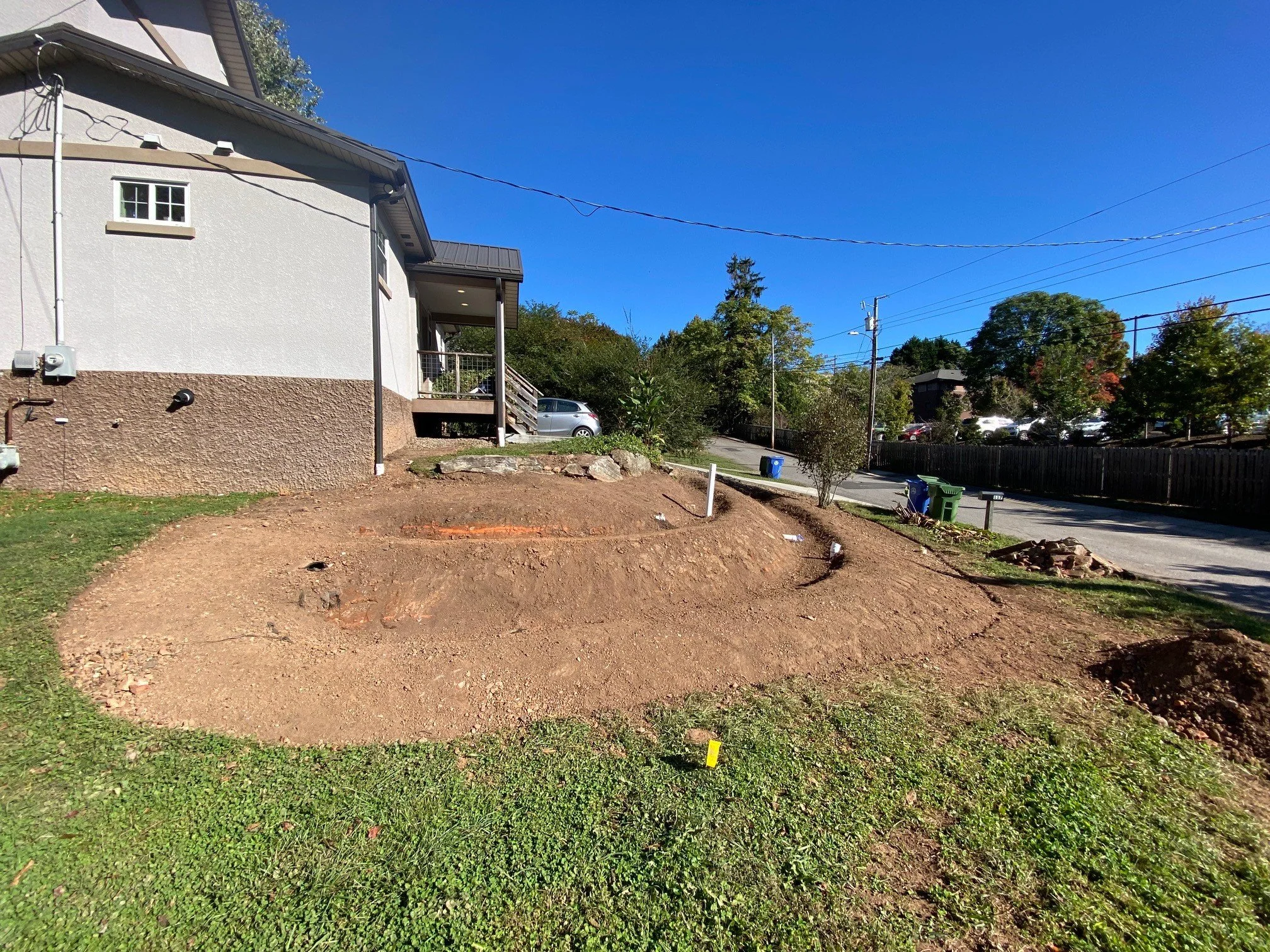
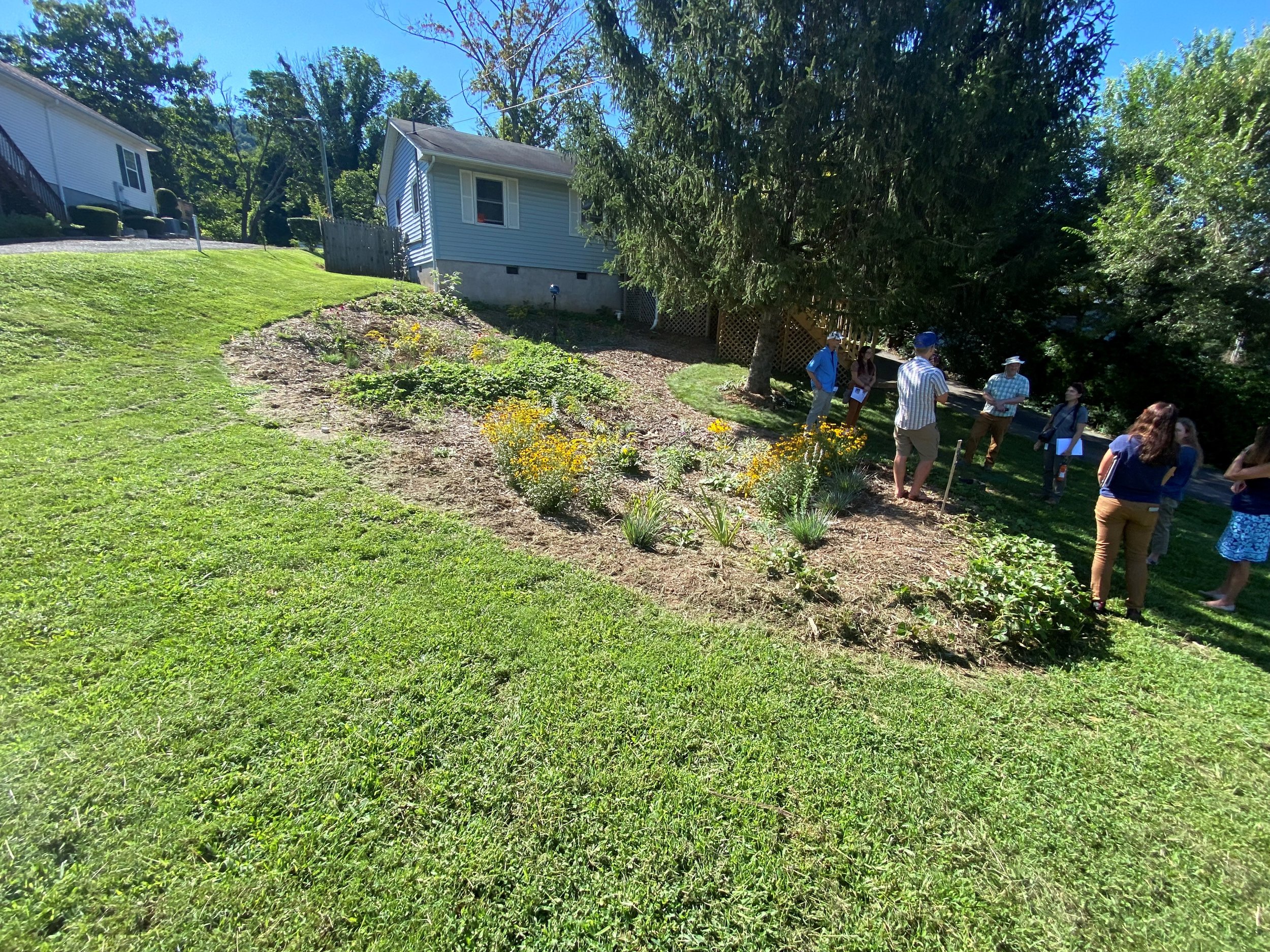
DIS in the Mountains is an innovative research and demonstration project exploring how disconnected impervious surface (DIS) practices can be adapted to the steep terrain of Western North Carolina. Funded by the North Carolina Land and Water Fund, the project was led by Blue Earth Engineering in partnership with RiverLink. The project team also included Lenoir Rhyne University, Wildlands Engineering and Asheville Drainage + Rainwater Harvesting.
DIS is a relatively simple stormwater strategy: rather than conveying runoff from rooftops and other impervious surfaces directly into storm drains and streams, rainfall is redirected into vegetated areas where it can infiltrate into the soil. This helps reduce runoff, filter pollutants, recharge groundwater, and lessen demands on downstream stormwater infrastructure. Riverlink
The challenge in the mountains is that conventional DIS practices are generally better suited to relatively flat landscapes. The project team developed and tested approaches specifically adapted to steep slopes, including a series of small rain basins and swales. In 2021, the practices were constructed at six residential sites within Asheville's Central Asheville Watershed, disconnecting approximately 5,490 square feet of rooftop area. In total, the project constructed eight rain basins and four swales and incorporated 900 plants representing 14 native species. Riverlink
The installations were monitored for two years to evaluate their performance. RiverLink reports that the practices successfully captured runoff and promoted infiltration under steep-slope conditions, demonstrating the potential for DIS to provide a practical and cost-effective approach to residential stormwater management in mountainous communities. Riverlink
The project reflects Blue Earth's broader interest in developing stormwater solutions specifically suited to the hydrology and terrain of the Southern Appalachians—using applied research to expand the ways communities can restore more natural water processes within developed landscapes. To read more about this innovative project, including the design report, please visit RiverLink’s website here.