
PROJECTS
Engineering with natural systems to restore watersheds, manage water more sustainably, and create resilient landscapes and communities.
Explore a selection of Blue Earth's projects below.
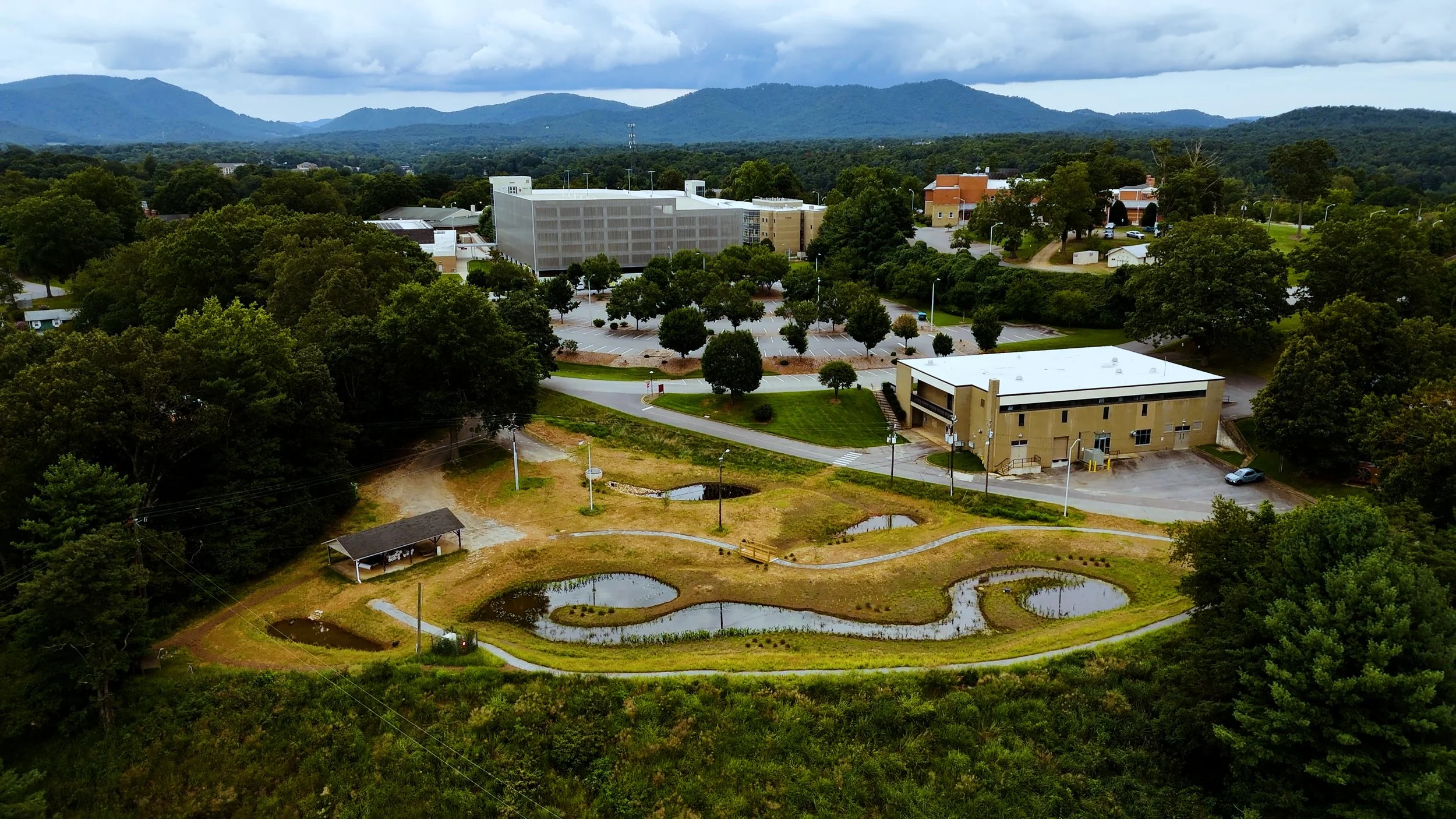
A-B TECH WETLAND EDUCATION PARK
In partnership with RiverLink, Blue Earth led the transformation of approximately one acre of formerly developed land into an educational wetland and green infrastructure demonstration park. The project integrates bio-infiltration, constructed wetland habitat, permeable surfaces, and public education to restore natural water processes within an urban campus.
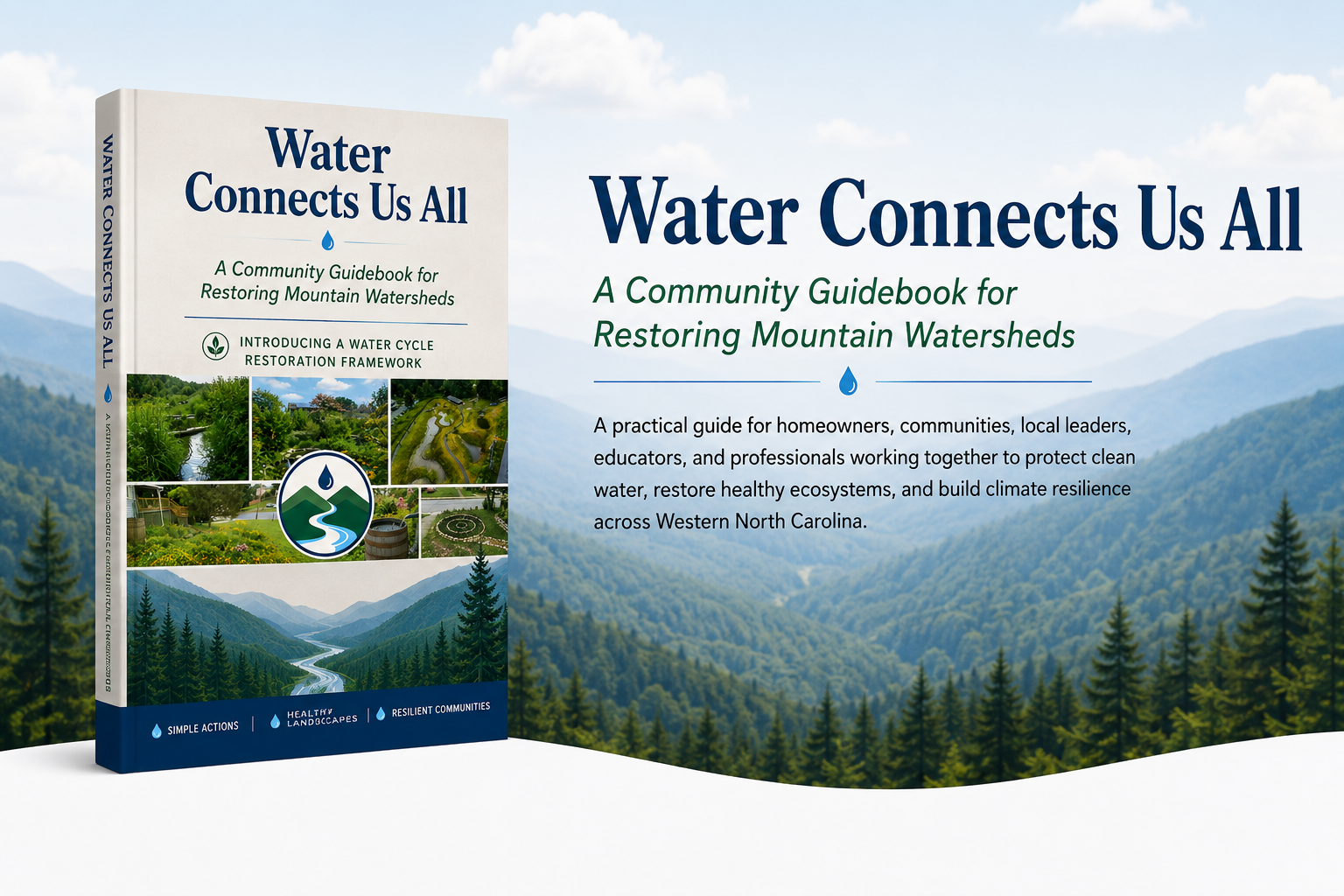
WATER CONNECTS US ALL: A COMMUNITY GUIDEBOOK FOR RESTORING MOUNTAIN WATERSHEDS
Led by Blue Earth’s Tim Ormond, P.E., Water Connects Us All is a practical guide to restoring mountain watersheds and the natural water cycle. Developed with Land of Sky Regional Council and EPA funding, it connects watershed science with practical strategies for communities and property owners.
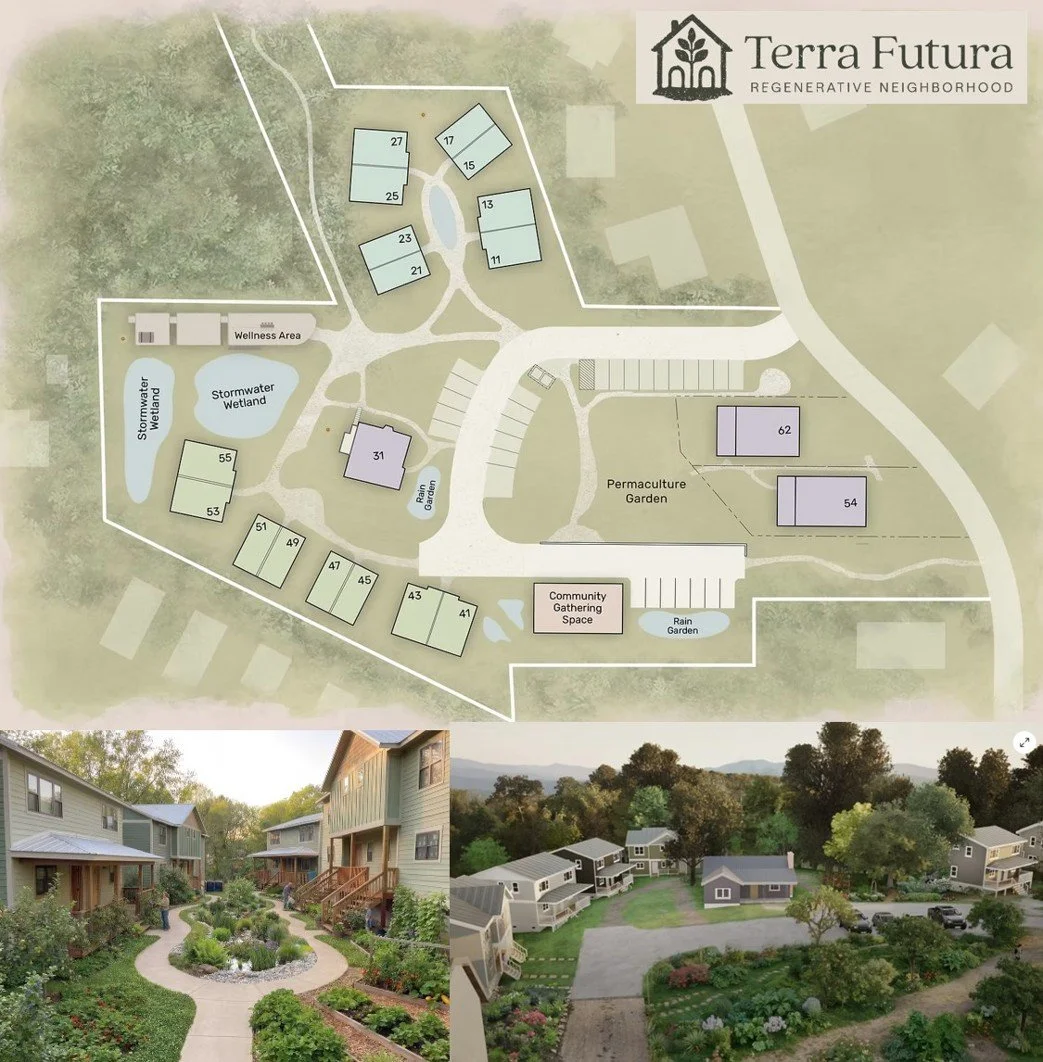
TERRA FUTURA ECOVILLAGE
Blue Earth provides stormwater and green infrastructure design for Terra Futura, an innovative eco-village in Asheville. The project integrates a distributed network of small-scale bio-infiltration practices into the community landscape, allowing rainfall to infiltrate naturally while supporting the development’s broader ecological goals.
LIGHTEN CENTER FOR CONSCIOUSNESS AND ACTION
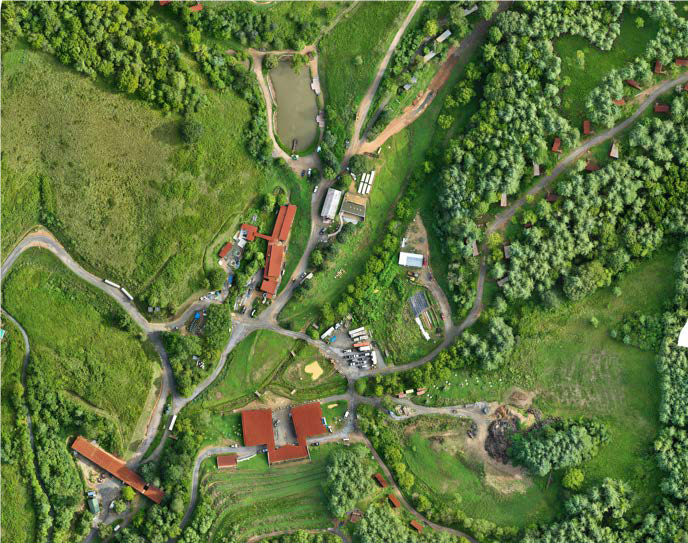
Blue Earth provides integrated water resources planning and engineering for LightEn’s nearly 500-acre retreat and education campus in Madison County. The work encompasses watershed modeling, stormwater wetlands, rainwater harvesting, stream and pond hydraulics, water-system planning, and dam safety—integrating water infrastructure with the site’s broader ecological vision.
DIS IN THE MOUNTAINS PILOT PROJECT
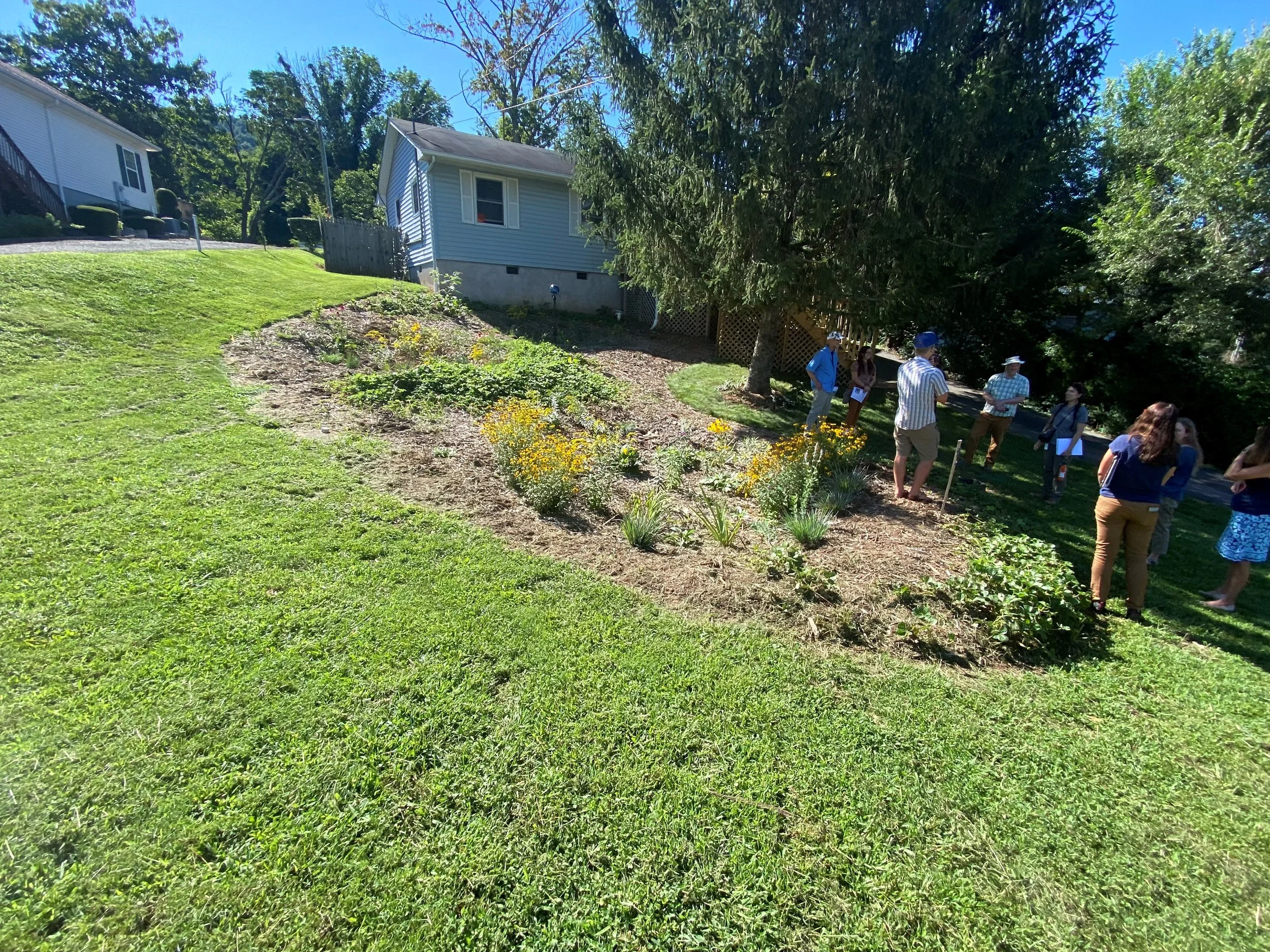
Blue Earth partnered with RiverLink to develop and test innovative stormwater practices designed for the steep slopes of Western North Carolina. Installed at six residential sites, the pilot demonstrated that small-scale basins and swales can effectively capture roof runoff and return rainfall to the ground in our mountain region.
CENTRAL ASHEVILLE WATERSHED RESTORATION PLAN
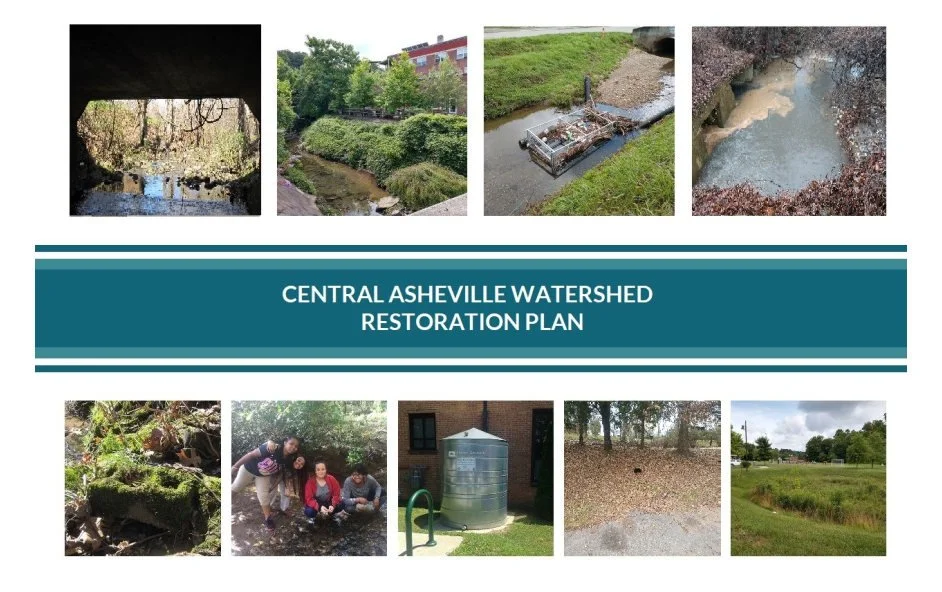
Blue Earth led a multidisciplinary team in developing a comprehensive restoration plan for Asheville’s urban Central Asheville Watershed. The project evaluated water quality and watershed conditions, identified restoration opportunities, and developed strategies to improve three urban streams and ultimately protect the French Broad River.
LAKE SUSAN DREDGING AND RESTORATION
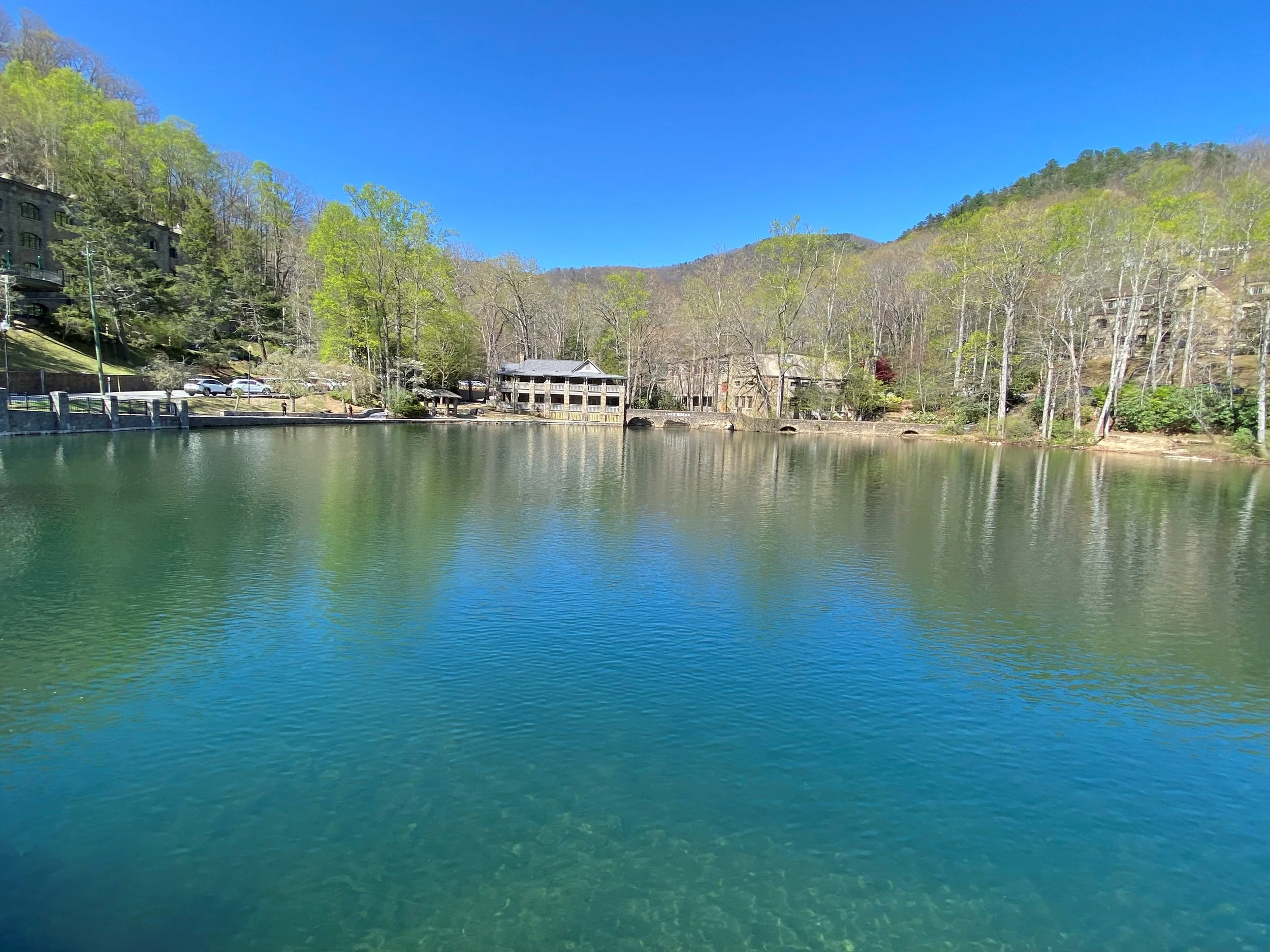
Blue Earth provided engineering and site planning for the restoration of Lake Susan in Montreat, including lake dredging, sediment management, wetland habitat improvements, and restoration of Flat Creek. Following Hurricane Helene, the project expanded dramatically to address unprecedented sediment deposition and strengthen the lake’s long-term resilience.
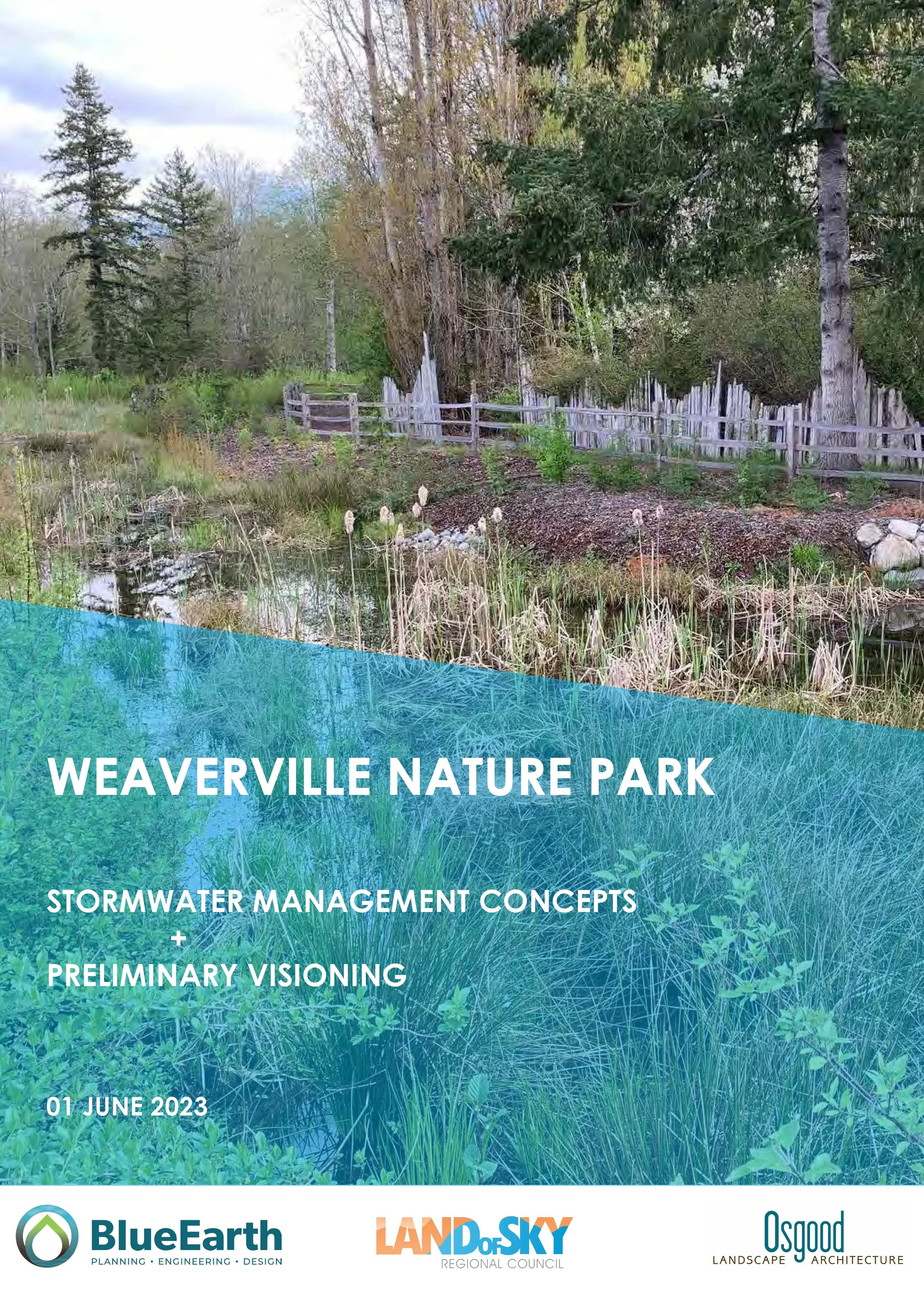
WEAVERVILLE MAIN STREET NATURE PARK
Blue Earth Engineering, in collaboration with Osgood Landscape Architecture, is designing stream restoration and stormwater improvements at Main Street Nature Park in Weaverville, North Carolina. Working with the Town of Weaverville and Land of Sky Regional Council, the project will transform two aging stormwater detention basins into constructed wetlands, stabilize eroding streambanks, restore native habitat, and enhance the park's ecological and educational value.
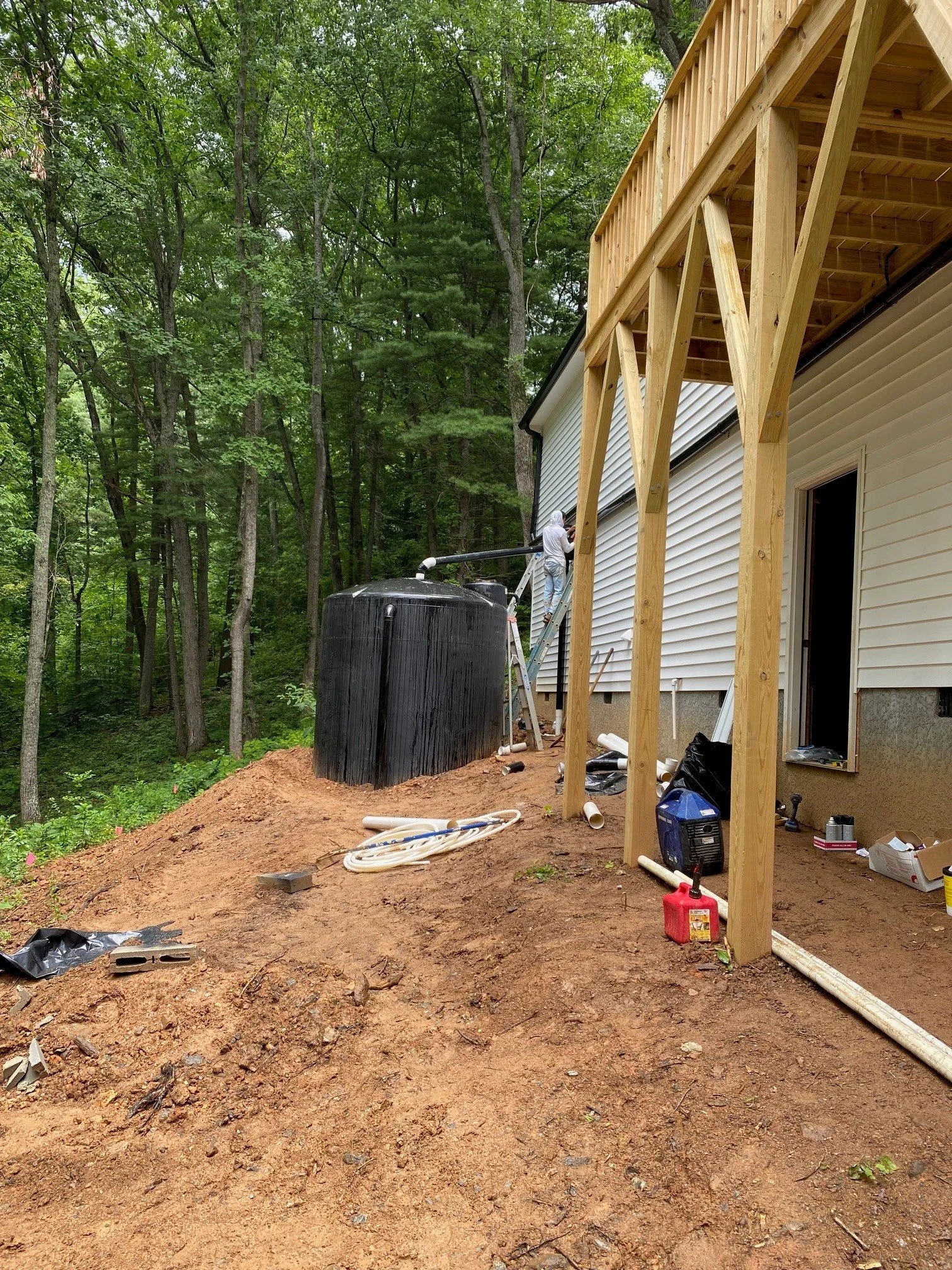
POTABLE RAINWATER HARVESTING SYSTEMS
Blue Earth provided engineering design, water supply modeling, and permitting assistance for a residential potable rainwater harvesting system near Weaverville, North Carolina. After a 905-foot-deep well yielded almost no water, the project turned to rooftop rainwater collection, incorporating 6,000 gallons of storage and advanced filtration and disinfection to provide an alternative domestic water supply..
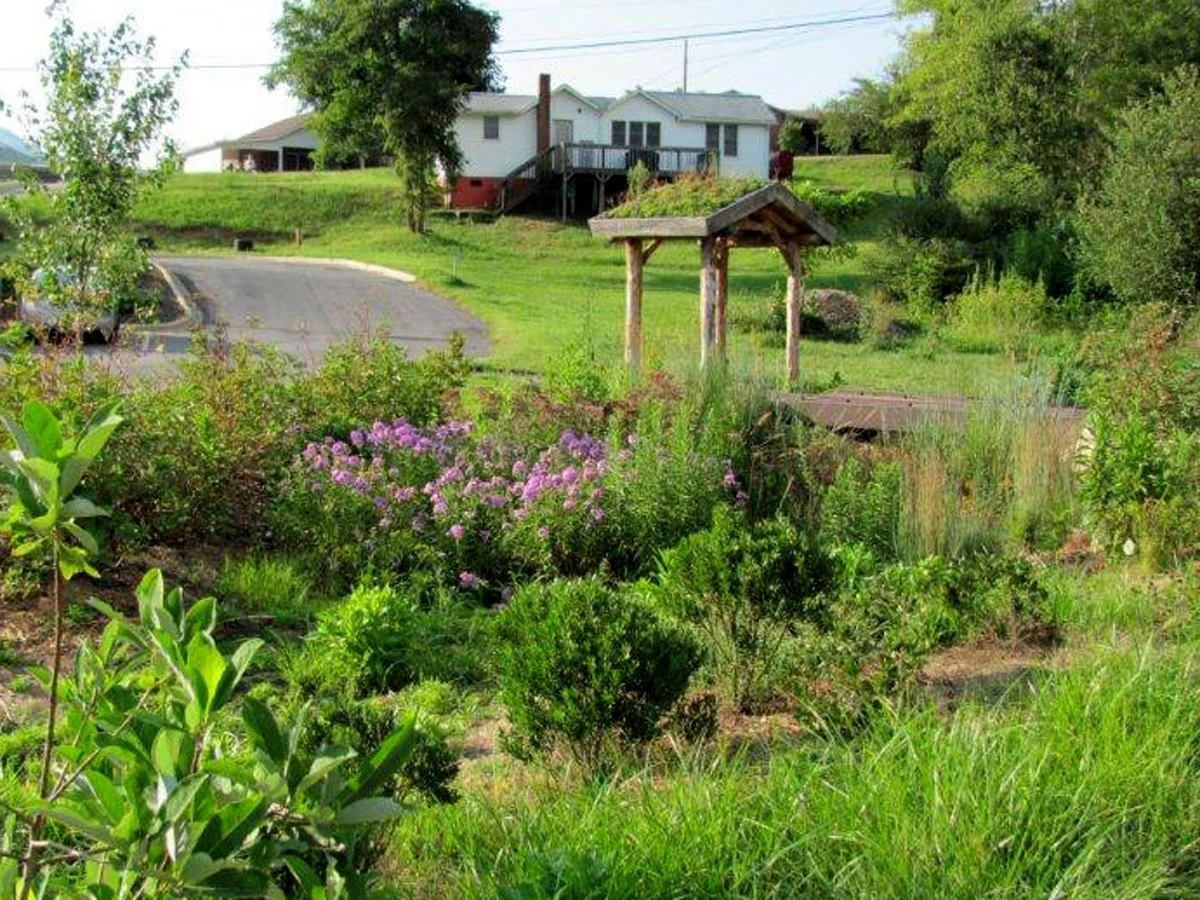
BAILEY MUNDY STORMWATER EDUCATION PARK
The Bailey Mundy Stormwater Education Park in Mars Hill, NC, integrates more than 20 innovative green infrastructure practices, including rain gardens, bioretention systems, constructed wetlands, and rainwater harvesting. Originally developed as the Mars Hill Stormwater LID Demonstration Project, the park combines sustainable stormwater management with ecological restoration and public education. Blue Earth (formerly HydroCycle Engineering) provided planning, engineering design, research, and project management in collaboration with local partners. The project received the Land of Sky Regional Council Friends of the River Award.
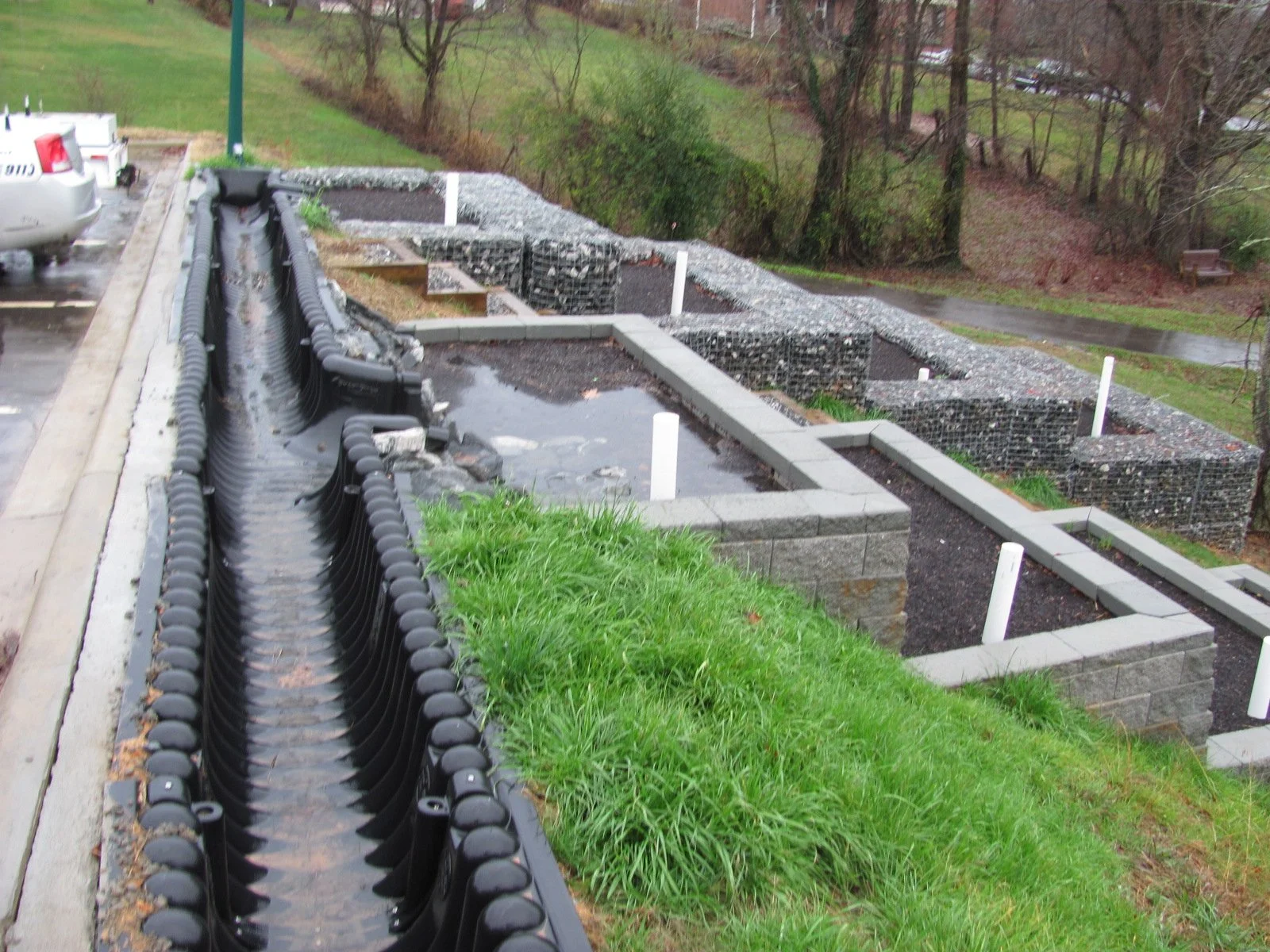
STEEP SLOPE BIORETENTION PILOT PROJECT
The Steep Slope Bioretention Pilot Project in Mars Hill, NC, explored innovative approaches to managing stormwater on steep mountain slopes where conventional practices are often impractical. Blue Earth Engineering (formerly HydroCycle Engineering) led the research and engineering design of two experimental bioretention systems incorporating terraced retaining walls, specialized filtration media, and controlled drainage. Constructed on slopes exceeding 50 percent, the project demonstrated new possibilities for treating stormwater runoff while addressing the challenges of slope stability and limited space.
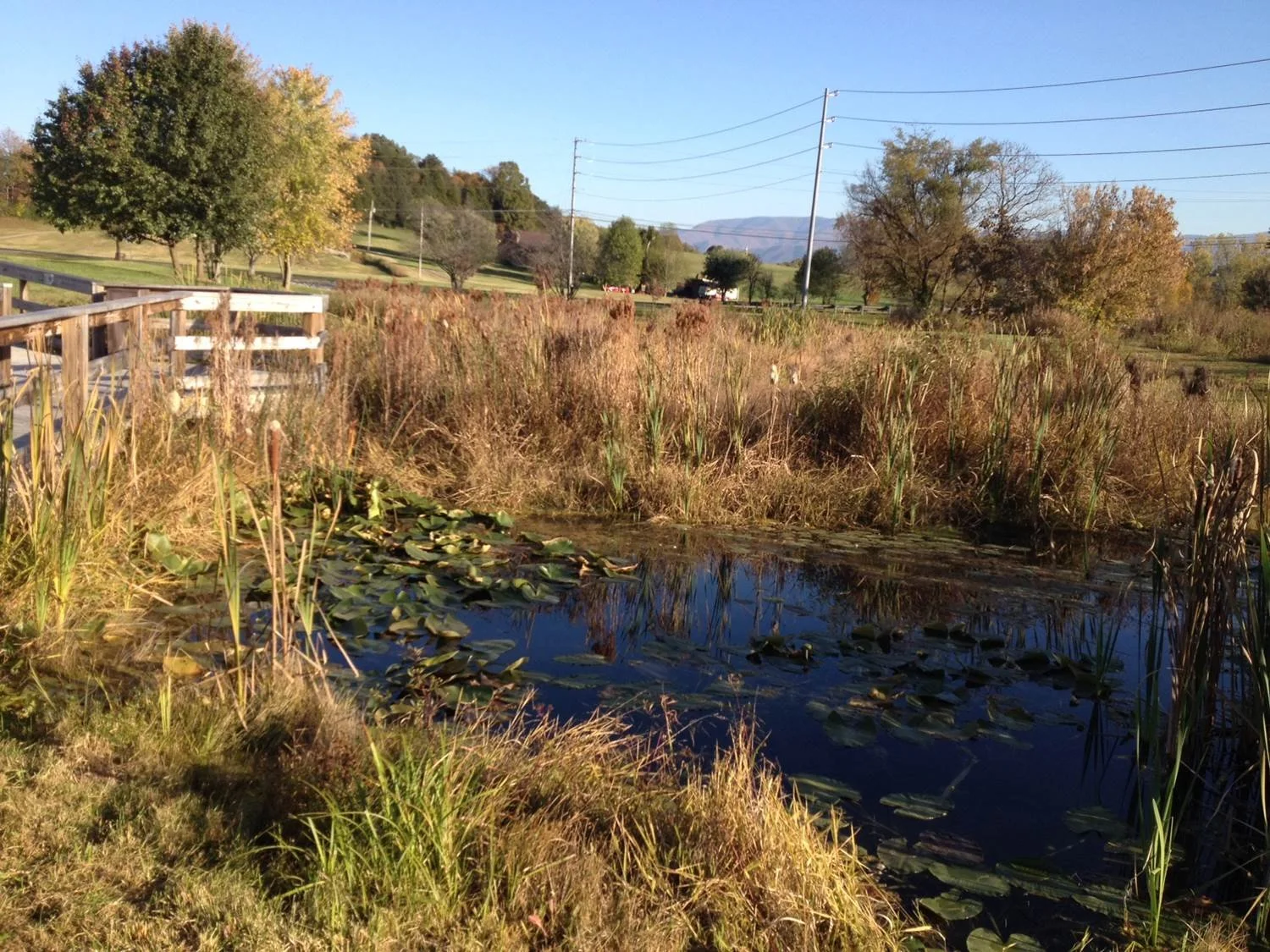
PAUL E. HAYDEN EDUCATIONAL WETLAND
The Paul E. Hayden Educational Wetland at Tusculum College in Greeneville, Tennessee, transformed approximately two acres of campus grounds into a living laboratory for watershed restoration and environmental education. Designed to treat stormwater runoff from more than 25 acres of developed land, the constructed wetland improves water quality while providing wildlife habitat and outdoor learning opportunities. Through HydroCycle Engineering, Blue Earth's predecessor firm, Tim Ormond, P.E., served as project manager and lead engineer, integrating ecological design, stormwater management, and community education.