LIGHT EN CENTER FOR CONSCIOUSNESS & ACTION
MADISON COUNTY, NC
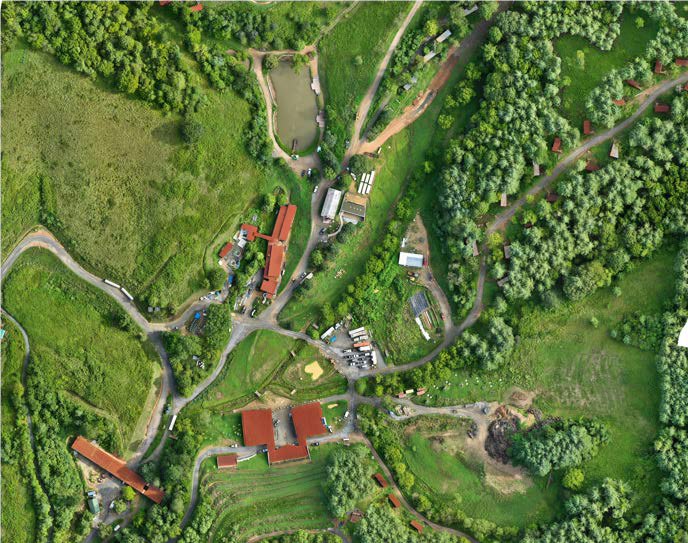
Set within nearly 500 acres of the Blue Ridge Mountains in Madison County, the LightEn Center of Consciousness and Action is a retreat and education campus designed around a close relationship between people, landscape, and natural systems. The broader project combines campus development with ecological restoration, including extensive work to restore native landscapes, streams, riparian areas, and watershed health. Osgood Landscape Architecture
Blue Earth Engineering has provided water resources planning and engineering for the project since its early development, working collaboratively with the project team to integrate the site's natural hydrology into the evolving campus master plan. The original Integrated Water Resources Plan evaluated the approximately 270-acre watershed draining through the property to Upper Thomas Branch, considering conditions ranging from drought to major rainfall events and the anticipated effects of climate change.
Blue Earth's work has included hydrologic and hydraulic modeling of the site's streams and ponds, stormwater management and green infrastructure planning, rainwater harvesting analysis, water-system planning, and detailed evaluations supporting buildings and infrastructure throughout the campus. Rainwater harvesting studies, for example, evaluated different roof capture areas and cistern sizes using 30 years of daily rainfall data to understand the potential for captured rainfall to offset campus water demands.
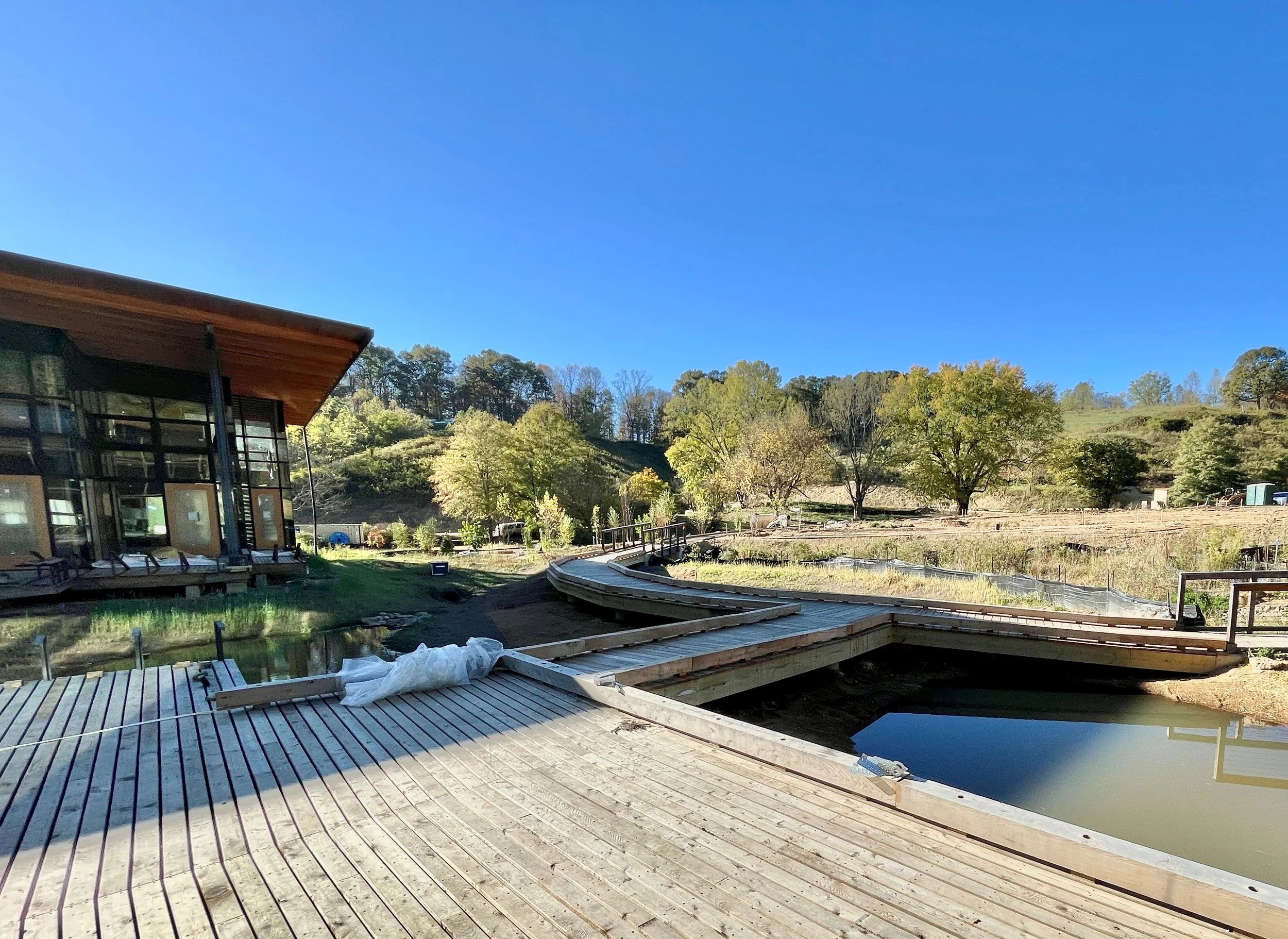
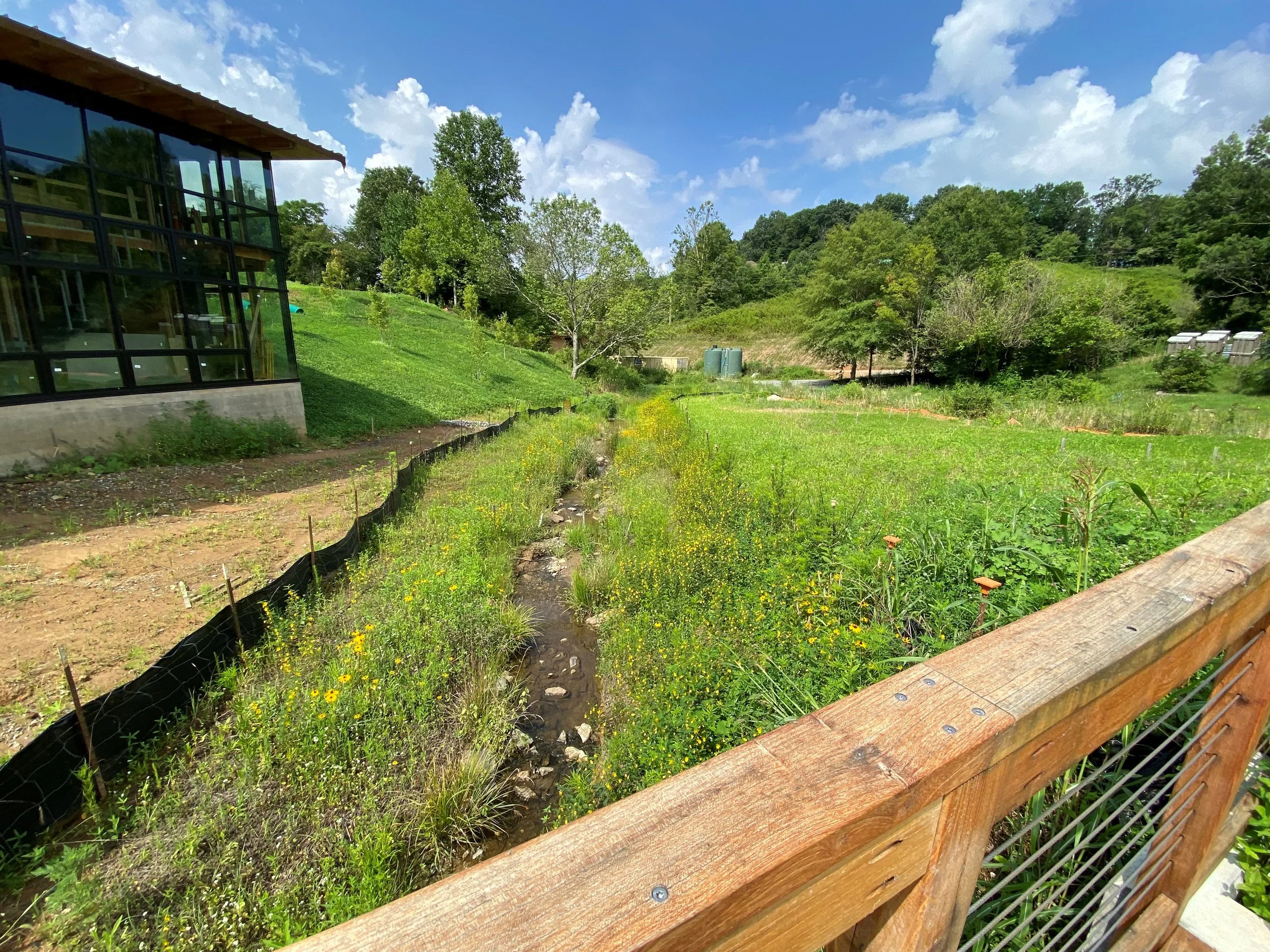
Water management within the campus core has evolved toward a landscape-based approach. In collaboration with Osgood Landscape Architecture, Blue Earth designed two stormwater wetlands to treat runoff from the Meeting Hall, Dining Hall, Event Center, Fitness Center, and surrounding areas. The wetlands provide required stormwater treatment while also creating additional wetland habitat and enhancing the landscape.
Blue Earth has also completed extensive engineering related to the campus ponds, streams, and dams. For the reflecting pond, Blue Earth developed watershed-scale hydrologic and hydraulic models and evaluated performance across storms ranging from frequent rainfall events through the 500-year storm and Probable Maximum Precipitation conditions. Dam-breach and HEC-RAS modeling have also been used to evaluate potential inundation and scour around important campus structures and inform their engineering design.
As the campus has developed, Blue Earth's role has expanded to include dam safety evaluations and permitting, Emergency Action Plans, and Operations and Maintenance planning. Together, this work reflects an integrated approach in which stormwater, streams, ponds, groundwater, water supply, buildings, and ecological systems are considered as parts of a connected water system.
The LightEn project demonstrates how engineering can support ambitious development while remaining responsive to the hydrology and ecology of the land—an approach consistent with the project's larger goal of creating a campus where ecological restoration, human well-being, and long-term stewardship reinforce one another.