STEEP SLOPE BIORETENTION PILOT PROJECT
MARS HILL, NC
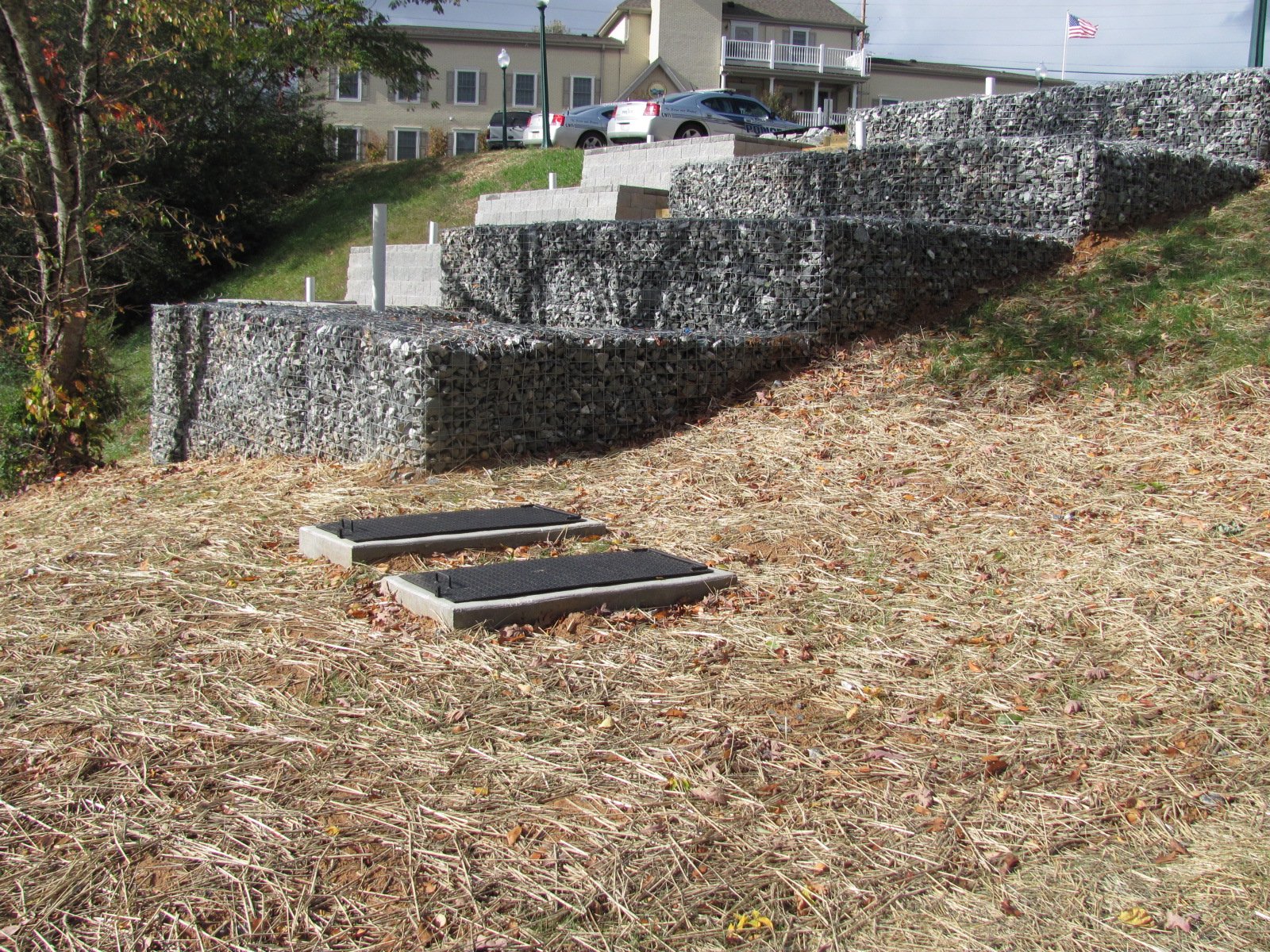
Managing stormwater runoff on steep mountain slopes presents significant challenges, particularly where conventional stormwater practices require relatively flat terrain. The Steep Slope Bioretention Pilot Project was developed to explore innovative approaches to overcoming these limitations and expanding the application of green infrastructure in mountainous regions.
Located adjacent to the Mars Hill Town Hall in Madison County, North Carolina, the project was funded through the North Carolina Clean Water Management Trust Fund's Innovative Stormwater Initiative. Blue Earth Engineering (formerly HydroCycle Engineering) led the research, planning, and engineering design in collaboration with project partners and specialized consultants.
Innovative Engineering and Design
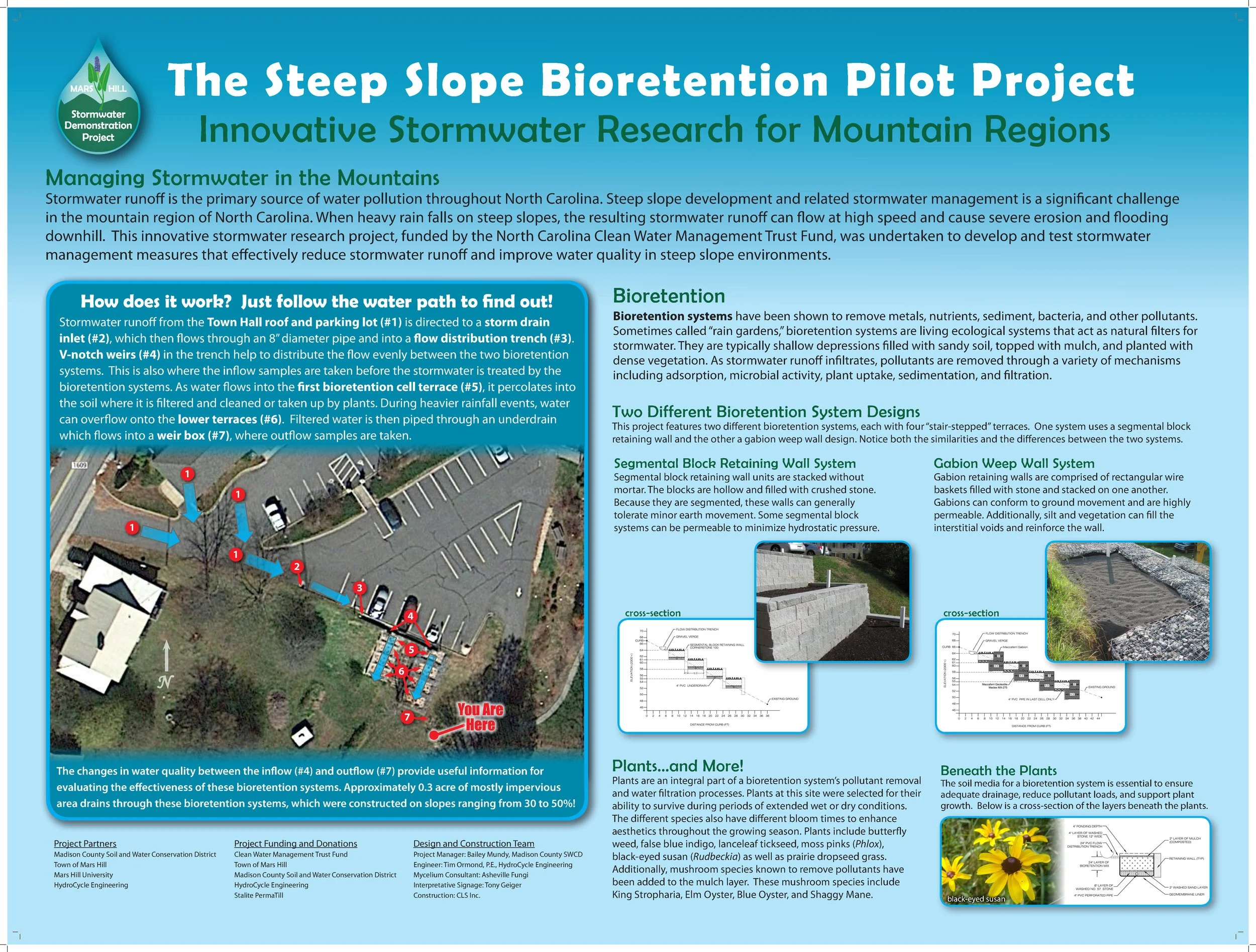
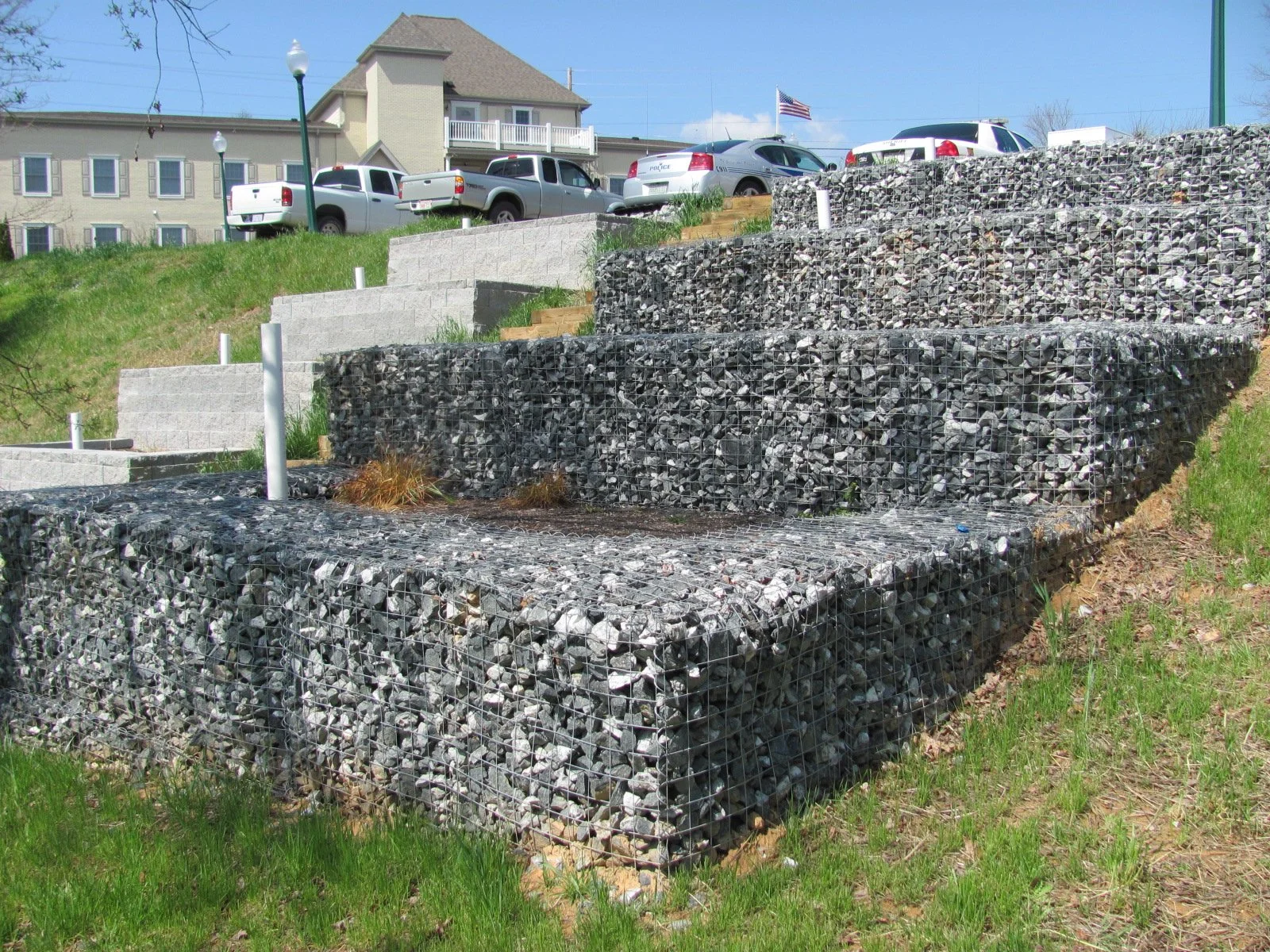
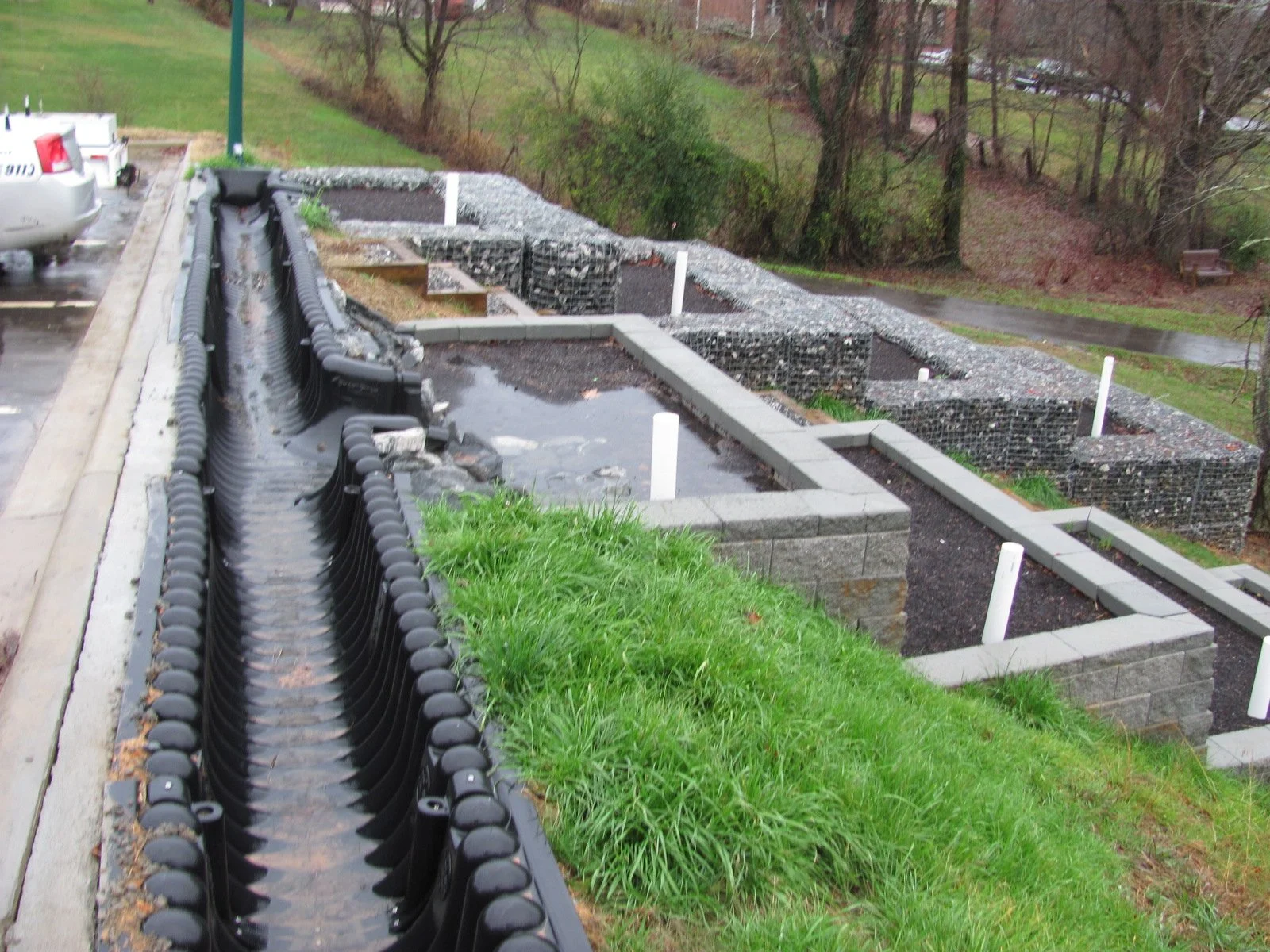
The project involved the design and construction of two experimental bioretention systems on slopes ranging from approximately 35 percent to more than 50 percent. Both systems incorporated terraced bioretention cells to treat stormwater runoff from the Town Hall parking areas.
Two different retaining wall approaches were evaluated:
Segmental Block Retaining Wall System: A series of terraced bioretention cells supported by reinforced segmental block retaining walls.
Gabion Weep Wall System: A terraced system incorporating rock-filled gabion walls designed to allow controlled drainage through the wall faces.
Unlike conventional bioretention systems, which often encourage infiltration into surrounding soils, the steep slope designs emphasized controlled drainage to minimize saturation and protect slope stability. Specialized filtration media, impermeable liners, underdrain systems, and carefully designed overflow pathways were incorporated to manage stormwater while reducing risks associated with steep terrain.
Research, Construction, and Monitoring
Completed in 2011, the pilot installations provided an opportunity to evaluate design feasibility, construction methods, costs, and stormwater performance under real-world conditions.
The research included hydrologic modeling, geotechnical evaluation, retaining wall design, construction documentation, and field monitoring. Students from Mars Hill University also participated in monitoring activities, contributing to the project's educational and research objectives.
The project demonstrated that properly engineered bioretention systems can be successfully implemented on slopes as steep as 53 percent. Both pilot systems reduced peak stormwater flows and provided stormwater filtration.
The research also identified important considerations for future applications, including the need for qualified geotechnical evaluation, careful management of subsurface drainage, appropriate retaining wall design, and consideration of construction costs.
Advancing Mountain Stormwater Management
The Steep Slope Bioretention Pilot Project expanded the understanding of how green infrastructure can be adapted to challenging mountain terrain. Its findings provide valuable guidance for engineers, planners, and communities seeking alternatives to conventional stormwater management in steeply sloping environments.
The project illustrates Blue Earth's commitment to applied research, innovative engineering, and the development of practical solutions for protecting mountain watersheds.
Technical Publication: Steep Slope Bioretention Pilot Project – Final Report (2014), HydroCycle Engineering.
Engineering
Blue Earth Engineering, Inc. (formerly HydroCycle Engineering)
Project Partners
Madison County Soil and Water Conservation District
Town of Mars Hill
Mars Hill University