PAUL E. HAYDEN EDUCATIONAL WETLAND AT TUSCULUM COLLEGE
GREENEVILLE, TN
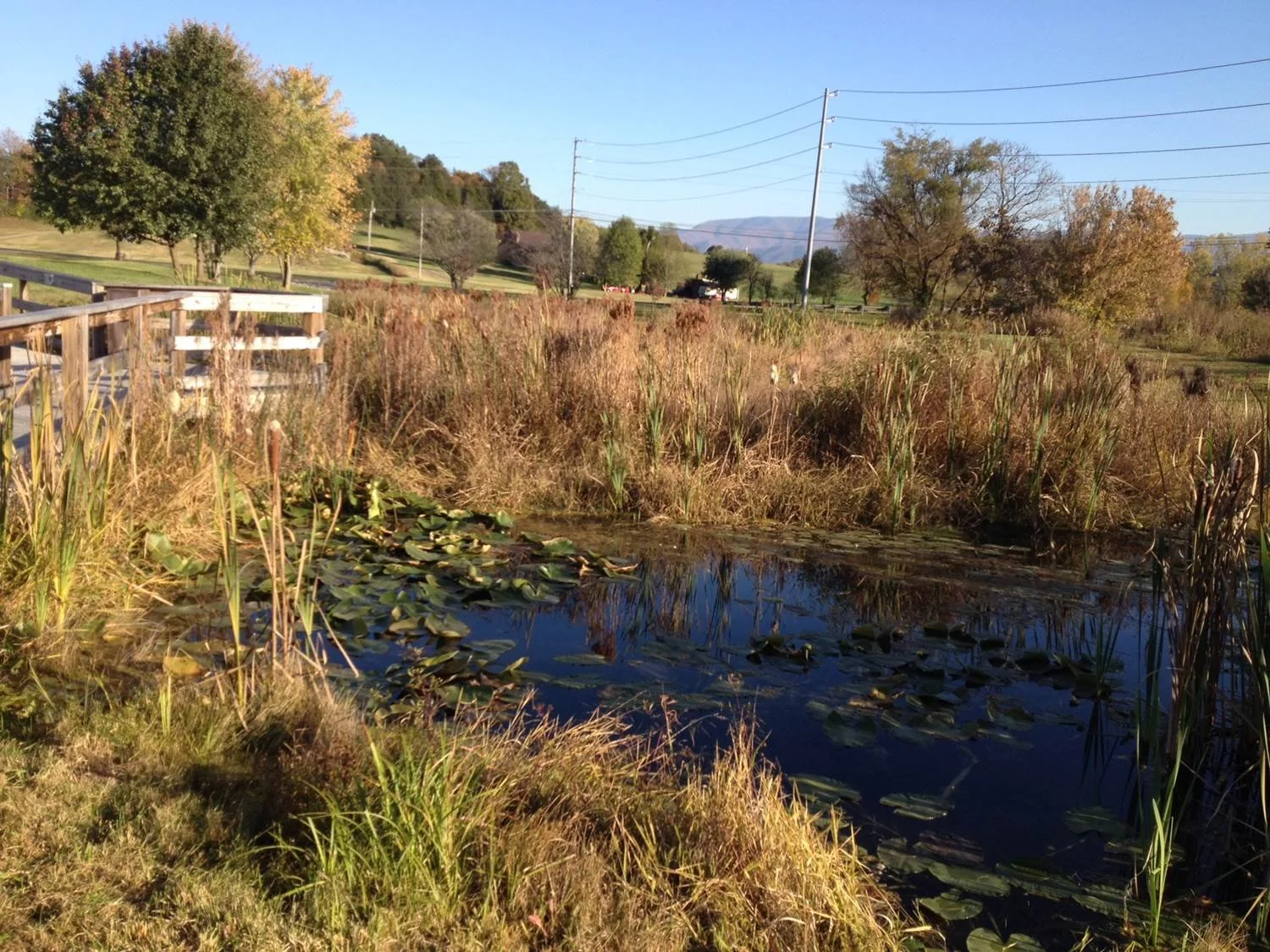
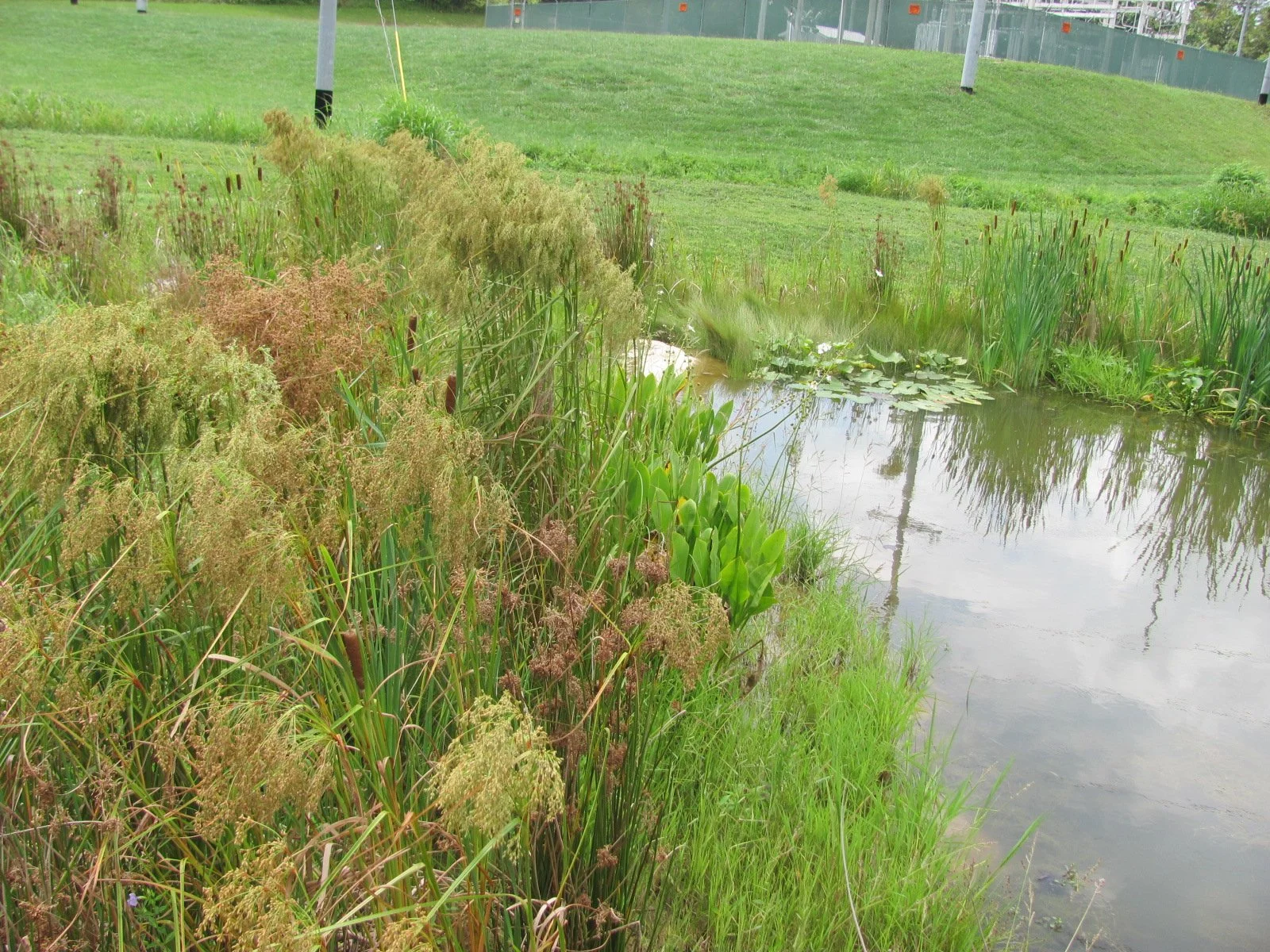
Developed in partnership with the Middle Nolichucky Watershed Alliance, Tusculum College, and local conservation organizations, this approximately two-acre constructed wetland system captures and treats stormwater runoff from more than 25 acres of campus parking lots, rooftops, roadways, and surrounding developed areas.
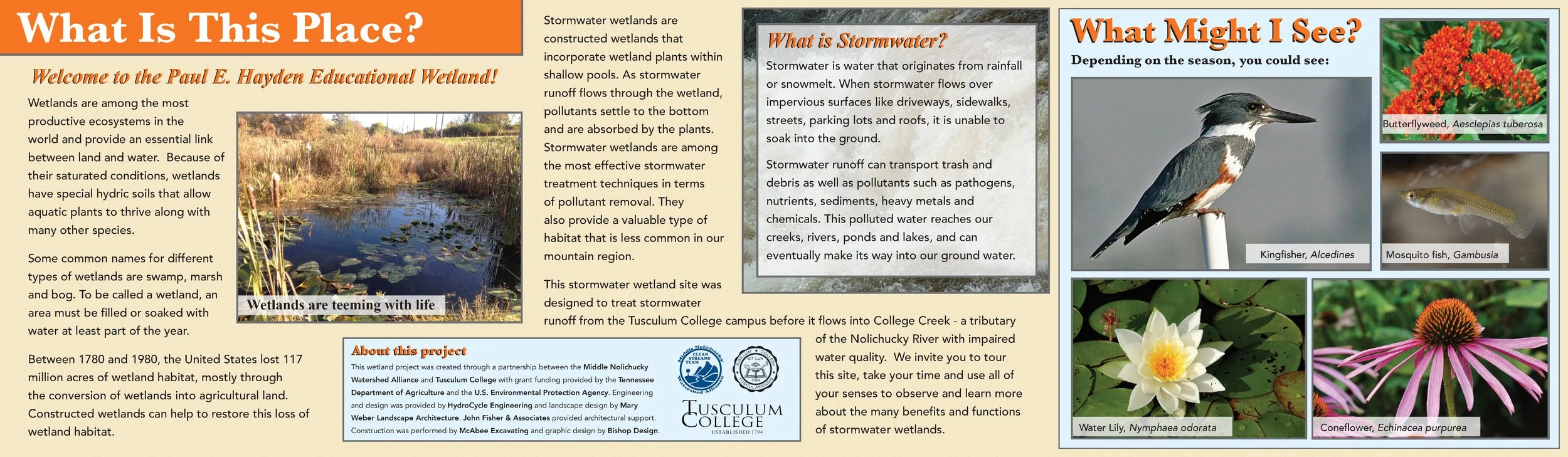
The project was designed to improve water quality in College Creek and the downstream Nolichucky River watershed while reducing runoff impacts, creating wildlife habitat, and providing opportunities for environmental education.
Engineering with Natural Systems
Through HydroCycle Engineering, the predecessor to Blue Earth Engineering, Tim Ormond, P.E., served as project manager and lead design engineer. The project integrated hydrologic and hydraulic modeling, watershed assessment, constructed wetland design, ecological restoration, and educational infrastructure.
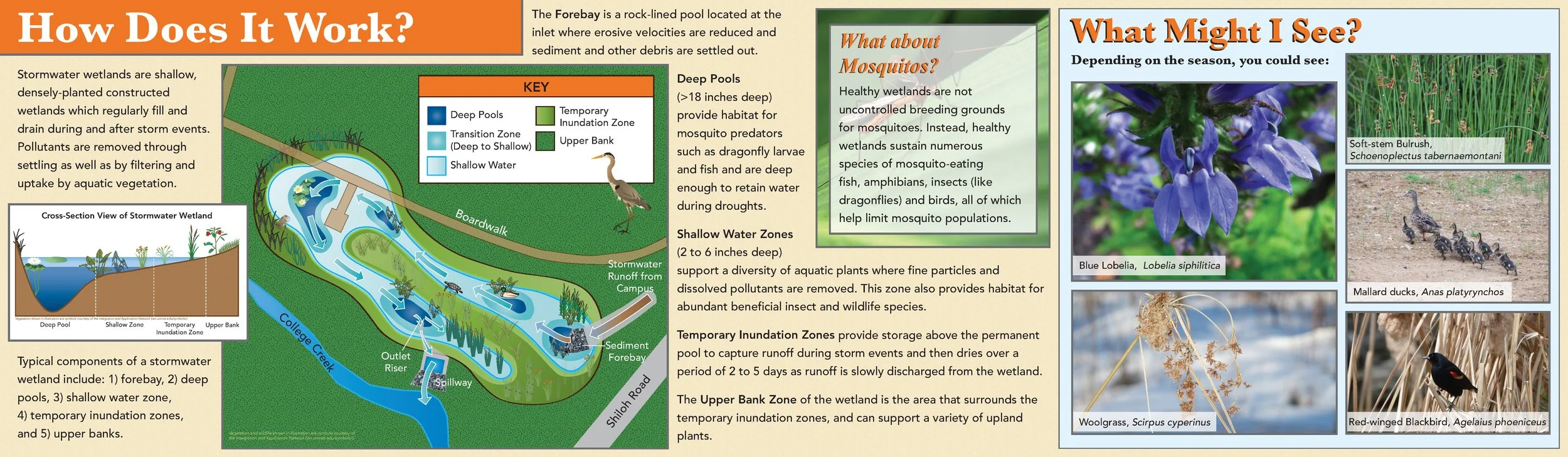
The wetland system incorporates multiple treatment zones designed to slow stormwater runoff, promote sediment settling, support natural biological treatment processes, and establish diverse wetland vegetation.
The completed facility includes walking trails, boardwalks, interpretive signage, water-quality sampling locations, and an outdoor classroom, allowing students and visitors to experience firsthand how natural systems can improve water quality.
Watershed Restoration and Community Collaboration
The educational wetland was a signature project of broader watershed restoration efforts supported by EPA Section 319 funding. As part of this work, Tim Ormond also assisted the Greene County Soil Conservation District in securing watershed restoration funding and developing comprehensive watershed plans addressing more than 17 miles of streams listed as impaired under Section 303(d) of the Clean Water Act.
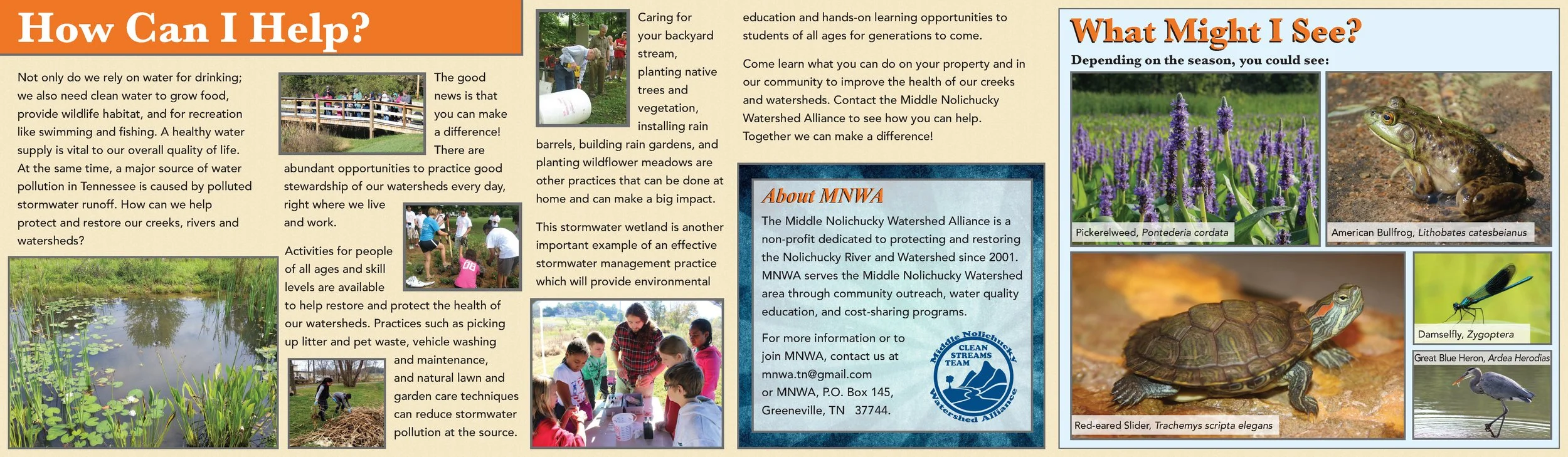
These watershed plans incorporated green stormwater infrastructure, stream assessment and restoration, erosion reduction, and other strategies for improving water quality throughout the region. The educational wetland provided a visible, hands-on demonstration of these approaches, connecting watershed-scale planning with practical ecological restoration.
A Living Outdoor Classroom
Since its completion in 2013, the wetland has served students, educators, and the broader Greene County community as an outdoor classroom and research facility.
The project supports environmental education ranging from elementary school programs to college-level research. Thousands of students have participated in hands-on wetland education activities, learning about water quality, aquatic ecosystems, wildlife habitat, and the importance of protecting local watersheds.
The wetland also provides a valuable setting for ongoing ecological stewardship, including native vegetation management, habitat maintenance, and community volunteer activities.
Honoring Paul E. Hayden
The wetland was named in honor of Paul E. Hayden, whose vision, dedication, and leadership were instrumental in bringing the project to life. His longstanding commitment to environmental stewardship helped create a lasting educational and ecological resource for the Tusculum community.
Project Services
Watershed Assessment and Restoration Planning | Hydrologic and Hydraulic Modeling | Constructed Stormwater Wetland Design | Green Infrastructure | Educational Signage | Construction Oversight
Project Location: Greeneville, Tennessee
Project Partners: Tusculum College, Middle Nolichucky Watershed Alliance, Greene County Soil Conservation District, and other community partners
Engineering: HydroCycle Engineering (predecessor to Blue Earth Engineering)